
Golf Betting in New Zealand in 2026: Tournaments, Odds, and What the TAB Monopoly Costs Punters
 Available in US
Current as of 27 October 2026 and checked against the Racing Industry Act 2020 (as amended in 2025) and TAB NZ’s own published terms.

Golf has always sat awkwardly in a betting market built around football and racing. A four-round tournament is four separate days of odds movement, with conditions, course setups, and player form all dragging prices in different directions. New Zealand punters who want a bet on the Masters, the Open Championship, or the BMW PGA Championship run straight into a wall that bettors in most other countries do not: since 28 June 2025 there is exactly one legal route to place a sports or racing bet online in New Zealand, and that route runs through TAB NZ. The following page works through what that means in practice, how golf odds are actually built, and what the headline price of a market is really telling the punter about cost.
Table of Contents
- The 2026 Major Calendar and Where TAB NZ Fits
- The Top 10 Reviewed: TAB NZ, Betcha, and the Offshore Field
- How Golf Betting Actually Works in New Zealand
- The Law: TAB NZ, the Racing Industry Act, and What “Sole Operator” Actually Means
- Responsible Gambling: What TAB NZ Publishes and What Players Must Know
- How to Approach Golf Betting Without Losing the Run of Yourself
- Bet Types in Golf: Outright, Each-Way, Matchups, and Multis
- The Cost Side of Golf Betting: What the Headline Number Hides
- Frequently Asked Questions
The 2026 Major Calendar and Where TAB NZ Fits
The men’s major season is the spine of golf betting. Four tournaments, roughly one a month from April to July, draw the deepest fields and the sharpest prices anywhere on the golf calendar. The Masters is played in April at Augusta National Golf Club in Georgia; the PGA Championship follows in May; the US Open runs in June; The Open Championship closes the stretch in mid-July, traditionally on a links course in the United Kingdom.
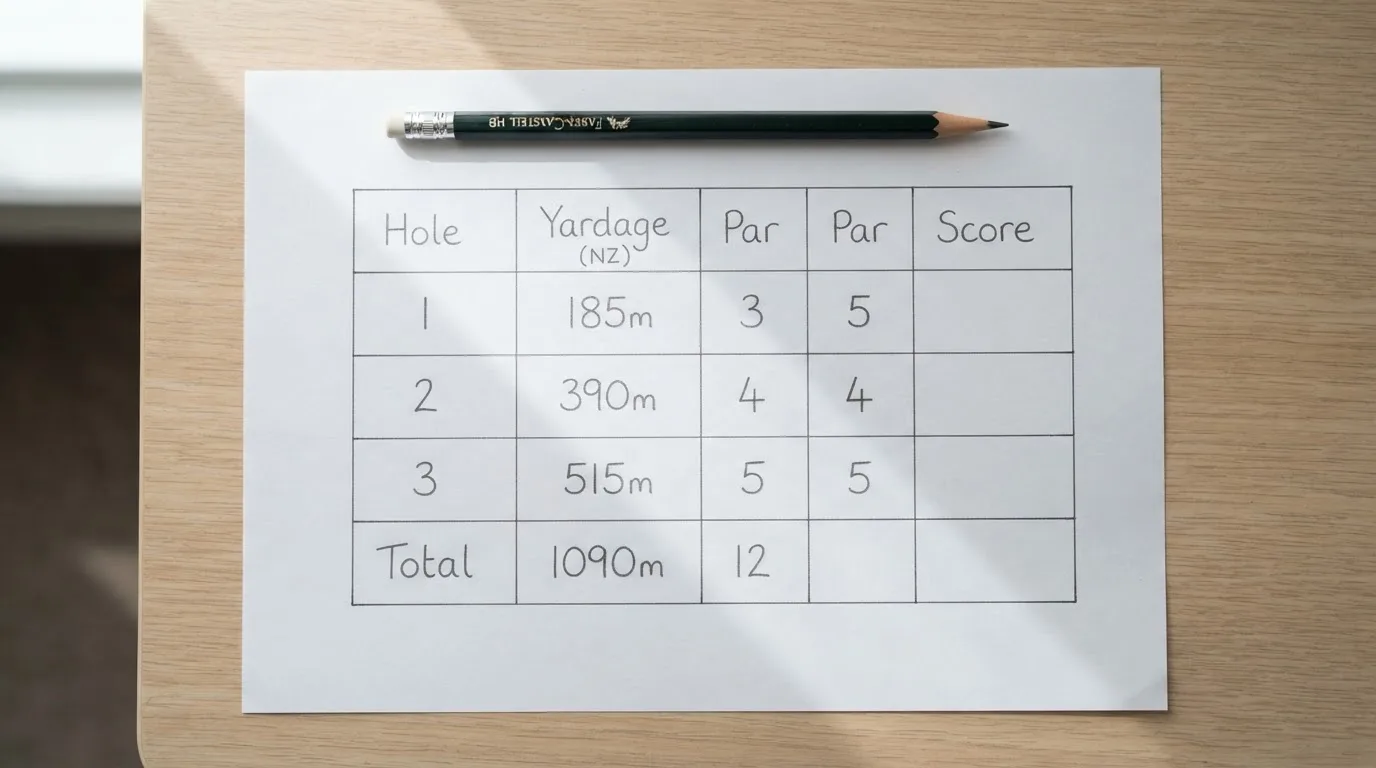
The 2026 Open Championship was played from 16 to 19 July 2026 at Royal Birkdale, Southport. Ryan Fox of New Zealand won the tournament with a total of 270 (-10), one stroke ahead of Cameron Young. Fox’s win was a rare moment for New Zealand golf: a New Zealand-born player lifting the Claret Jug on a course where the wind off the Irish Sea punishes anything less than committed shot-making. For TAB NZ’s market, the win mattered less than the simple fact that punters had a New Zealand player to back at a single bookmaker that also held the only legal betting monopoly in the country.
The majors sit alongside a year-round tour programme. The PGA Tour, the DP World Tour, and the LPGA Tour all run weekly events; the four women’s majors are now firmly established in the betting market, with the Chevron Championship, the US Women’s Open, the KPMG Women’s PGA Championship, and the Evian Championship drawing sustained handle. The men’s majors remain the liquidity peaks, and the week of a major is when TAB NZ’s golf markets carry the widest selection: outright winner, each-way places, three-ball matchups, finishing position markets, and live in-play pricing through all four rounds.
A typical TAB NZ golf card covers outright winner, each-way terms, head-to-head matchups between named players, three-ball (or “3-ball”) betting where three competitors play together and the lowest round wins, two-ball (or “2-ball”) betting where two players are paired and the lower score wins the group, and finishing-position markets such as top-five, top-ten, and top-20 finish. Live in-play pricing runs through all four rounds of stroke-play events, with markets suspended briefly at the start of each player’s round and re-opened once the group tees off.
The Top 10 Reviewed: TAB NZ, Betcha, and the Offshore Field
Ten brands appear in the comparison below. The first two are TAB NZ’s own online brands and are the only operators that may lawfully take racing and sports bets from a person in New Zealand since the Racing Industry Amendment Act 2025 took effect. The remaining eight are international operators that New Zealand players encounter through search results, affiliate pages, and word-of-mouth; each is marked as not licensed in New Zealand, because the law on this point is unambiguous and the consequence of treating one of them as a local alternative is real. Each operator’s own terms and conditions are quoted as the brands themselves publish them. No operator in the list is endorsed as a destination for a New Zealand-based customer; offshore brands carry no New Zealand complaints route and no New Zealand harm-minimisation framework.

| Brand | New Zealand status | What the operator’s own terms state on golf |
|---|---|---|
| TAB | TAB NZ brand; only lawful online betting operator in NZ | Golf outright, each-way, three-ball and two-ball matchups, live in-play through all four rounds; 18+ age requirement; TAB NZ safer-gambling tools available |
| Betcha | TAB NZ brand; only lawful online betting operator in NZ | Same betting markets as TAB NZ under the TAB New Zealand umbrella; published by Entain New Zealand Limited; 18+ |
| LegendPlay | Not licensed in New Zealand | Sportsbook covers football, tennis, basketball and ice hockey; golf market presence not documented |
| BigClash | Not licensed in New Zealand | Pre-match and live sports betting; virtual sports and esports; golf market presence not documented |
| Winz | Not licensed in New Zealand | Sports betting bonus promotion under separate Sportsbook T&C; golf market presence not documented |
| BetAlright | Not licensed in New Zealand | Football, tennis, basketball, ice hockey, American football, baseball; golf market presence not documented |
| Thunderpick | Not licensed in New Zealand | Esports-first; cash-out available; Champions League to NFL markets; golf market presence not documented |
| FunBet | Not licensed in New Zealand | Football, basketball, rugby, baseball, volleyball, tennis, ice hockey, American football; golf market presence not documented |
| RTbet | Not licensed in New Zealand | Football, tennis, basketball, ice hockey, American football, baseball; golf market presence not documented |
| BillyBets | Not licensed in New Zealand | Football, tennis, basketball, ice hockey, baseball, combat sports, esports, virtual sports; golf market presence not documented |
The point of the table is not the columns themselves. It is the column the table does not have: no other brand publishes golf markets, and TAB and Betcha are not listed because the operator is the only lawful option, but because both brands actually publish golf outright and matchup markets under their own betting rules. For every other brand listed, the safest assumption is that the reader checks the operator’s own sportsbook before forming a view, and that doing so from inside New Zealand means breaking section 74AAA of the Racing Industry Act 2020.
TAB
TAB is the senior retail and online brand of TAB New Zealand. The site has been the country’s only legal bookmaker since the Racing Industry Act 2020 was passed, and the sole operator for online sports and racing bets since 28 June 2025. The platform publishes outright winner, each-way, head-to-head, three-ball and two-ball markets on PGA Tour, DP World Tour, LPGA Tour, and the four majors; live in-play pricing runs across all four rounds of stroke-play events. The TAB NZ app, published as “TAB – Racing & Sports Betting” under the seller name New Zealand Racing Board on the New Zealand App Store, has been available since 8 September 2014 and carries a 17+ App Store rating while the operator’s own terms require customers to be 18 or older to bet. The app includes Trackside live race streaming with in-app betting, racing form, Blackbook and Jockey Challenge tools, and a simplified wallet for deposits and withdrawals.

Worth it for the New Zealand-based punter who wants golf betting handled by the one operator the law points at, with New Zealand dollar accounts, a local complaints route, and harm-minimisation tools built into the app. The same monopoly is what makes every other option offshore and unlawful for the operator to serve New Zealand.
Betcha
Betcha is the second of TAB NZ’s two online brands, published on the New Zealand App Store by Entain New Zealand Limited and first released on 6 August 2024. Entain runs the TAB business under a 25-year agreement signed in 2023; that deal gives Entain a 50/50 share of gross profits, with at least $150 million a year flowing to TAB NZ for the first five years and a one-off $100 million payment to the racing sector. Betcha covers horse, greyhound and harness racing alongside rugby, NRL, MMA and UFC, NBA, NFL, tennis, cricket, football, motorsports and esports; the golf market sits under the same multi-code umbrella as TAB. The two brands are one operator group, never rivals.
Worth it for the same New Zealand-based reader as TAB, and the choice between them is more about the app experience and the promos each brand runs than about the golf market itself, which is shared. A punter who wants to keep racing and sports in separate products has a reason to pick one; everyone else can use either interchangeably.
LegendPlay
LegendPlay is not licensed in New Zealand. The brand names an Anjouan Gaming Authority licence, which gives no right to take bets from a person in New Zealand under section 74AAA of the Racing Industry Act 2020. The sportsbook lists football, tennis, basketball and ice hockey as featured codes; the golf market is not part of the documented sportsbook offering. No New Zealand complaints route or harm-minimisation framework reaches the brand, and the Department of Internal Affairs has told unlicensed providers serving New Zealand to withdraw with immediate effect.
The verdict is simple: not a route for a New Zealand-based punter. The brand has no documented golf product, and even where its sportsbook does run, the operator is in breach of section 74AAA by serving New Zealand customers.
BigClash
BigClash is not licensed in New Zealand. The brand names a Curaçao licence (8048/JAZ), which gives no right to take bets from a person in New Zealand. The sportsbook covers pre-match and live sports betting across international and local leagues, virtual sports, and esports on FPS and MOBA titles; golf is not part of the documented offering.

A New Zealand-based reader has no path to use this brand lawfully. Where the operator does run, the absence of a New Zealand complaints route means a dispute has to travel to Curaçao or to the operator’s own internal process.
Winz
Winz is not licensed in New Zealand. The brand names Anjouan and Tobique licences under holder Novatrix SRL, neither of which gives any right to take bets from a person in New Zealand. The site runs a sports betting bonus promotion under separate Sportsbook T&C, Sports Rules and Bonus Terms and Conditions pages; the documented sportsbook content does not list golf.

The promotion is not the point for a New Zealand reader; the breach of section 74AAA is. Using the brand from inside New Zealand is a breach by the operator, not (under current law) by the player, but the practical consequences, including non-payment of large wins, sit with the punter.
BetAlright
BetAlright is not licensed in New Zealand, and the brand names no licence that applies in New Zealand at all. The sportsbook covers football, tennis, table tennis, basketball, ice hockey, American football and baseball, with live betting and virtual sports sections; golf is not part of the documented offering.

The price on a New Zealand-based punter is the same as for every other offshore brand in the list: the operator is breaking section 74AAA by serving New Zealand customers, no New Zealand harm-minimisation framework applies, and there is no documented golf market on the brand.
Thunderpick
Thunderpick is not licensed in New Zealand. The brand names a Curaçao licence (OGL/2024/677/0722) under holder Paloma Media B.V., which gives no right to take bets from a person in New Zealand. The site is esports-first, covering CS2, League of Legends, Dota 2 and Valorant, and the sportsbook offers a cash-out feature and markets from the Champions League to the NFL; golf is not part of the documented offering.
A New Zealand-based reader looking at Thunderpick is reading an esports-first bookmaker with a sportsbook bolted on; the golf offering is not documented, and the breach of section 74AAA is the same as for every other offshore brand in the comparison.
FunBet
FunBet is not licensed in New Zealand, and the brand names no licence that applies in New Zealand. The sportsbook offers odds on football, ice hockey, American football, basketball, volleyball, tennis, rugby and baseball, with live betting and a 24/7 bookmaker; golf is not part of the documented offering.
The rugby and football coverage might catch a New Zealand reader’s eye, but the breach of section 74AAA by the operator, and the absence of a New Zealand complaints route, are the only points that matter.
RTbet
RTbet is not licensed in New Zealand. The brand names a Curaçao licence, which gives no right to take bets from a person in New Zealand. The sportsbook covers football, tennis, table tennis, basketball, ice hockey, American football and baseball, with live betting and virtual sports; golf is not part of the documented offering.
A New Zealand-based reader has no lawful path to use the brand. The offshore licence is irrelevant to New Zealand customers, and the documented sportsbook does not include golf anyway.
BillyBets
BillyBets is not licensed in New Zealand, and the brand names no licence that applies in New Zealand. The site runs a casino and a sportsbook under one account; the sportsbook covers football, tennis, table tennis, basketball, ice hockey, American football, baseball, combat sports, esports, virtual sports and live betting. Golf is not part of the documented offering.
A New Zealand-based reader’s only reason to look at BillyBets is curiosity; the breach of section 74AAA, the absence of a New Zealand complaints route, and the absence of a documented golf market all apply.
How Golf Betting Actually Works in New Zealand
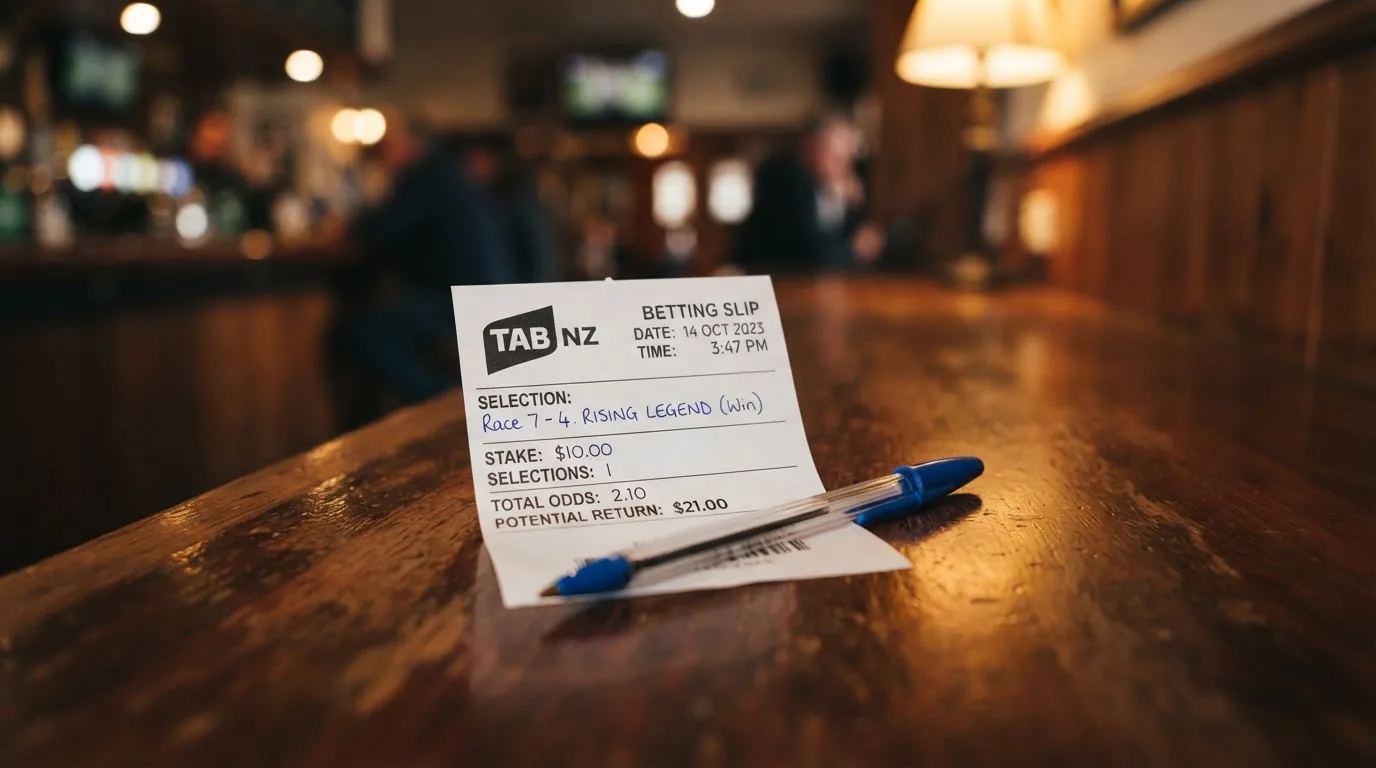
The shape of a golf betting market looks straightforward from a betting slip, and the arithmetic underneath it is where the real cost lives. The headline price is a decimal number; the stake is what the punter puts down; the return is stake multiplied by the odds if the bet wins. A $10 bet at odds of 12.00 on Ryan Fox to win the 2026 Open Championship returned $120 if it landed, which it did, and $0 if it did not. The arithmetic is simple and it does not change from sport to sport.
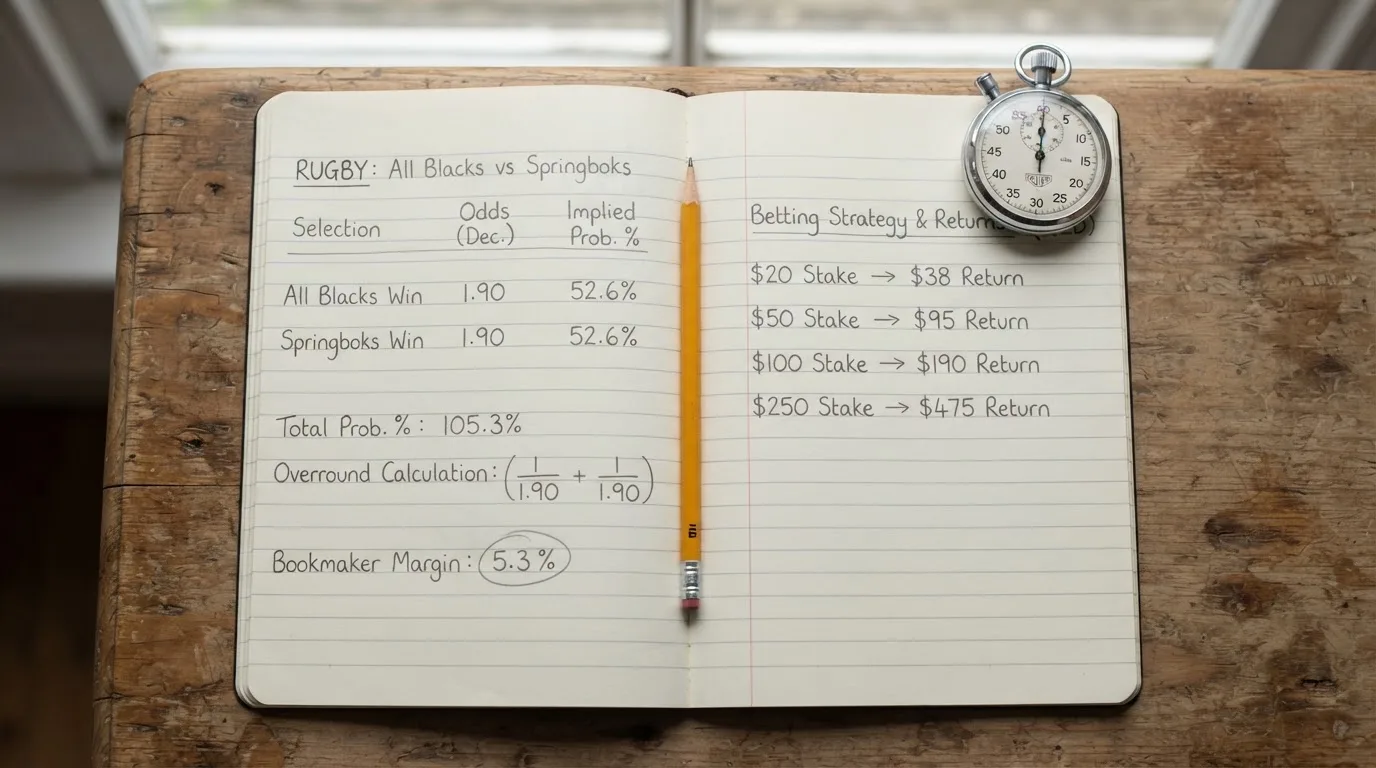
What changes, and what matters for cost, is the margin the bookmaker builds into every price. A market is “sharp” or “loose” depending on how much the operator keeps of every dollar wagered. Take an illustrative two-way market priced at 1.90 / 1.90: the implied probabilities add to 1/1.90 + 1/1.90, which is roughly 1.053. Divide the numerator by that sum to get the payout share, which works out to roughly 0.95 or 95 % of every dollar wagered. The margin is 1 minus the payout share, which is roughly 5 % in this example. That 5 % is what the bookmaker keeps on average across all bets on this market, and it is the cost the punter pays over and above the “true” odds of the event.
Real golf markets are rarely two-way. Outright winner is a market with perhaps 40 to 80 runners, each carrying its own price; the bookmaker’s margin is spread across all of those prices, and the overround on the whole field sits higher than on a tight two-ball matchup. Each-way betting on golf has its own margin layered on top: the each-way terms are usually a quarter of the outright odds for places one to four, or a fifth for places one to five or six, and the bookmaker’s margin on the place portion of the bet is calculated separately from the win portion. A punter who only looks at the headline price of an each-way bet has missed half the cost.
The margin is not printed on the betting slip. It can be read from the odds, and reading it is the single biggest upgrade a golf punter can make. Two markets at the same headline odds carry different margins depending on the field and the round; a packed PGA Tour event in peak form has tighter margins than a small DP World Tour field in February. Three-ball matchups carry their own margin, often wider than the outright book because the field is so small. A punter who wants to shop for value is shopping the margin as much as the headline price.
The Law: TAB NZ, the Racing Industry Act, and What “Sole Operator” Actually Means
The legal frame around golf betting in New Zealand is short, blunt, and unambiguous. The Racing Industry Act 2020 establishes TAB NZ as the sole betting provider for racing and sports in New Zealand. The Racing Industry Amendment Act 2025 inserted section 74AAA, which provides that no person other than TAB NZ may offer racing betting, sports betting or other racing or sports betting to a person in New Zealand, regardless of where that person is resident or incorporated. The change took effect on 28 June 2025, and the Department of Internal Affairs told providers serving New Zealand to withdraw with immediate effect.
There is no licence to apply for and no licence register for bookmakers, because there is only one lawful provider. The law does not geo-block offshore websites; it puts liability on the offshore operator. The Online Casino Gambling Act 2026 licenses online casino gambling only and does not license sports betting; TAB New Zealand winning the right to apply for a casino licence does not extend the betting monopoly.
The penalty for breaching section 74AAA is not stated in the section itself. No prosecution of an offshore bookmaker under the new rule was found in the public record. The player side is clearer: section 19(4) of the Gambling Act 2003 (inserted in 2025) says an individual may not be convicted for placing a bet with an offshore betting operator in breach of section 74AAA. No source states a penalty for a player. The honest framing is that New Zealand law targets the operator, that DIA warns players of the risks of using offshore brands, and that no published penalty for a player was found.
TAB NZ’s partner Entain runs the TAB business under a 25-year agreement signed in 2023. The deal gives Entain a 50/50 share of gross profits, with at least $150 million a year flowing to TAB NZ for the first five years and a one-off $100 million payment to the racing sector. The two online brands, TAB and Betcha, are run by TAB New Zealand under that umbrella; they are one operator group, never rivals, and the golf market on one brand is the golf market on the other.
What may be bet on is racing and sports betting from TAB NZ only. TAB NZ takes fixed-odds and tote (pool) bets; its published betting rules define bets such as Win, Place, Each Way, Quinella, Exacta, Trifecta, First Four, Double, Treble, Daily Double, Running Double, Quaddie and Big6, plus Multis and Same Game Multis (a multi whose legs come from one event). Live betting is listed in the TAB NZ apps; any statutory restriction on in-play markets is not established. No lawful New Zealand betting exchange exists, and spread betting is outside TAB NZ’s sports-betting definition. Bets on politics and novelty markets: not established. There is no statutory per-bet cap; limits are TAB NZ’s own terms. The ban covers events held inside and outside New Zealand. Greyhound racing is closing in stages from 1 August 2026, and from that date offshore operators may not take bets on greyhound races either.
Tax for the player sits on the other side. Inland Revenue guidance says recreational gambling winnings are generally not taxable, and prize money from TAB horse, dog and trotting races is not taxable. A person who bets as a business is a different case; that is general information, not tax advice, and the right move for any punter whose betting has crossed from hobby into something more is to consult Inland Revenue or an accountant. Operator side: TAB NZ pays the Problem Gambling Levy of 0.74 %, in force from 1 July 2025 to 30 June 2028. Overseas operators supplying New Zealand residents pay online gambling duty (12 % of profits since 1 July 2024, 16 % from 1 January 2027), but a duty being payable does not make an offer lawful, and the page never writes that tax payment shows a bookmaker is legal.
Responsible Gambling: What TAB NZ Publishes and What Players Must Know
TAB NZ publishes safer-gambling tools in its app: deposit limits, time-outs, and self-exclusion. A self-exclusion applies across both TAB NZ brands (TAB and Betcha) because they are one operator group. The free New Zealand gambling helpline is 0800 654 655, and the text line is 8006; both are listed on the TAB NZ app’s safer-gambling pages. Safer Gambling Aotearoa is the public-facing harm-minimisation body that the gambling helpline sits behind.
The age for TAB NZ betting is 18; betting under 18 is an offence under section 89 of the Racing Industry Act 2020. Land-based casinos in New Zealand set the age at 20, which is the casino age and not the betting age, and the two must never be merged. TAB NZ accounts need a verified New Zealand address and identity documents before a withdrawal can be processed.
There is no single national online-betting exclusion register; the register the Online Casino Gambling Act 2026 will require is for online casinos only. A punter who self-excludes from TAB NZ is excluded from TAB NZ; the same exclusion does not extend to offshore brands, because the offshore brands have no New Zealand exclusion framework to honour. That asymmetry is part of the price of using an offshore operator, alongside the absence of a New Zealand complaints route and the absence of New Zealand harm-minimisation tools.
TAB NZ must keep the risks of problem and underage gambling minimised and pays the Problem Gambling Levy of 0.74 % of its betting revenue. The levy funds harm-minimisation services; it does not change the cost of a bet for the punter. Offshore operators do not pay the levy into New Zealand’s harm-minimisation framework, and any harm-minimisation tool they publish sits inside their own jurisdiction with no reach into New Zealand’s Gambling Helpline or Safer Gambling Aotearoa.
A punter who wants to set a hard ceiling on what a bad week can cost sets a deposit limit inside the TAB NZ app and sticks to it. A punter who wants a longer break activates a time-out or self-exclusion. A punter who is worried about their own betting, or about someone else’s, calls 0800 654 655 or texts 8006; both are free, both are confidential, and both are run by New Zealand-based counsellors. None of these tools is a substitute for the punter making their own call about whether to bet, and none of them changes the underlying arithmetic of a golf market.
How to Approach Golf Betting Without Losing the Run of Yourself
There is no system that wins at golf betting, and the page will not pretend there is. A golf tournament is four days of weather, course setup, and form, with a field of 70 to 156 players, and a single bad bounce on the back nine on Sunday can flip a leaderboard. Anyone who tells a reader otherwise is selling something. The job of a page like this one is to make sure the punter understands what is being bought when a bet is placed.
Bankroll is the working budget a punter sets aside for betting, separate from rent, groceries, and the rest of life. The size of the bankroll decides the size of each stake, and the size of each stake must be small enough that a bad week does not empty the bank. A common starting point is one to two per cent of the bankroll per bet; a tighter bankroll calls for tighter stakes, and a punter who wants action on a small bankroll accepts that the action is small.
Form reading is the work between tournaments. Recent finishes, course history, fit between the player’s game and the course, and current injury or fatigue all feed into a price. A player coming off three top-tens in a row at similar courses is a different bet than a player returning from injury; the odds may or may not reflect that, and reading the gap is where a punter makes or loses money over a season. None of this changes the underlying margin the bookmaker keeps, and a sharp price on the wrong player still loses.
Course fit matters more in golf than in almost any other sport. Augusta National rewards length and a hot putter; Royal Birkdale in 2026 rewarded accuracy off the tee and patience in the wind; a US Open setup at a long, penal course rewards a completely different game than a PGA Tour stop at a resort course. Punters who only look at world rankings miss this. Punters who look at course-specific form, on courses similar to the one being played, find edges that rankings never show.
Odds shopping is the underrated skill. The outright winner market on a major tournament moves for four days; a price on Thursday morning is not the same as a price on Saturday afternoon, and a punter who places a bet on the wrong day leaves money on the table. Live in-play markets on TAB NZ carry their own margin, often wider than pre-event, and a punter who places a pre-event bet on Thursday and a second live bet on Saturday has to read the cumulative cost, not just the headline price.
Each-way betting deserves its own paragraph. The place portion of an each-way bet is calculated separately from the win portion; the each-way terms on TAB NZ for the majors are usually a quarter of the outright odds for places one to four, or a fifth for places one to five or six. A punter who only looks at the headline each-way price has missed the place margin. A punter who calculates the implied probability of both win and place, weighted by the field’s likely finishing distribution, has a better read on the actual cost of the bet.
The discipline that holds all of this together is the record. A punter who tracks every bet, the stake, the odds, the result, and the closing line (the price the market settled at) has a way to measure whether their reading of form is producing an edge or just noise. Without a record, a punter cannot tell the difference between skill and luck, and over a season luck always wins.
Bet Types in Golf: Outright, Each-Way, Matchups, and Multis
Golf betting has more bet types than most sports, and the cost on each type is different. Understanding the difference is half the work.
Outright winner is the headline market: a price on every player in the field to win the tournament. The field size drives the margin; a 60-player Masters field carries tighter margins than an 80-player PGA Tour stop, and a small DP World Tour event in February carries wider margins than either. A punter who backs outright winners needs patience: the strike rate is low, the variance is high, and a season of outright bets usually shows up as a flat line punctuated by big wins and small losses.
Each-way is two bets in one: a win bet at the headline odds and a place bet at the each-way fraction. A punter who places a $10 each-way bet at odds of 21.00 with each-way terms of 1/4 places 1-4 has $10 on the win at 21.00 and $10 on the place at 5.25. If the player wins, both legs pay. If the player finishes in the top four, the place leg pays and the win leg loses. The bookmaker’s margin is layered on both legs, and the place leg is the easier one to underestimate.
Three-ball betting (or “3-ball”) is a market on a single group of three players playing together in a round. The lowest score in the group wins the bet. The field is tiny, which means the margin is often wider than on outright markets, but the variance is also lower because there are only three possible outcomes. A punter who reads group form (player A is hot, player B is struggling, player C is steady) can find edges that the outright market does not show.
Two-ball betting (or “2-ball”) is the same shape with two players. The margin is similar to three-ball, the variance is higher, and the price movement in the round is the most volatile of any golf market. TAB NZ lists two-ball and three-ball markets for every round of the majors and for most weekly PGA Tour and DP World Tour events.
Head-to-head matchups are a market on two named players, irrespective of their grouping on the course. The bookmaker sets the price; the margin is usually tight, and the variance is moderate. Head-to-head markets are useful when a punter has a strong read on the relative form of two players and a weaker read on the rest of the field.
Finishing-position markets (top-five, top-ten, top-20) sit between outright winner and head-to-head. The strike rate is higher than outright winner, the variance is lower, and the margin is usually wider than outright because the field is structured as a small number of outcomes (top-five or not). A punter who has a strong read on a player to contend but not to win has a route to a bet here.
Multis (also called accumulators or parlays) are bets where every leg must win for the bet to pay. The odds multiply together, the margin on each leg compounds, and the strike rate is the product of the strike rates of each leg. A four-leg multi at 3.00 per leg has combined odds of 81.00, but the implied probability is roughly 1.2 %, which means the bookmaker’s margin over four legs is substantial. Multis are the bet type most often marketed to recreational punters and the bet type the bookmaker’s margin bites hardest.
Same-game multis (SGMs) on golf combine two or more markets from the same tournament into one bet. The legs are correlated (a player to win and that player to be top American are correlated outcomes), which means the margin on each leg overlaps with the others. TAB NZ publishes same-game multis on the majors and on most weekly PGA Tour events. The cost on an SGM is hidden in the structure, and a punter who wants to understand the cost has to read each leg separately and combine them.
Live in-play markets on golf run through all four rounds of stroke-play events, with markets suspended at the start of each player’s round and re-opened once the group tees off. The margin on live markets is usually wider than on pre-event markets because the bookmaker has less time to set a sharp price. A punter who places a live bet on Saturday afternoon at a wider margin is paying a premium for the timing. That premium is the price of being able to react to what is happening on the course.
The Cost Side of Golf Betting: What the Headline Number Hides
The “cost” angle of the page is what this section is for. The headline odds on a golf market look like the price, but the cost is the bookmaker’s margin, the each-way terms on place bets, the compounding margin on multis, the wider margin on live markets, and the absence of a New Zealand complaints route on every option except TAB NZ.
The bookmaker’s margin on a typical golf outright market sits in a band. A packed major field with 80+ players carries a margin that compounds across every runner; the implied probabilities of every runner add to more than 100 %, and the gap between the sum and 100 % is the margin. A two-ball or three-ball market with only two or three runners carries a tighter margin in absolute terms but a wider percentage margin because the field is so small. The cost a punter pays is the gap between the implied probability and the “true” probability of the outcome; on a market with 5 % margin, the punter pays roughly 5 cents on every dollar wagered in expectation over many bets.
Each-way terms are the second layer of cost. A punter who places a $10 each-way bet at 21.00 with 1/4 terms 1-4 has paid $20 in stakes for two bets. The win leg at 21.00 carries the outright margin; the place leg at 5.25 carries its own margin, often wider because the place market is less liquid. The combined cost of both legs is higher than the cost of a single win bet at 21.00, and a punter who treats the each-way as a single bet has mispriced it.
Multis compound the margin across legs. A four-leg multi at 3.00 per leg has combined odds of 81.00, but the bookmaker’s margin on each leg adds to the overall cost. The combined margin on a four-leg multi is typically higher than 15 %, and the variance is high. The bookmaker’s marketing leans on multis because the headline odds look large; the cost lives in the compounding margin.
Live in-play markets carry a wider margin than pre-event markets because the bookmaker has less time to react to new information. A punter who places a live bet on Saturday afternoon at odds of 4.50 has paid a wider margin than the pre-event price of 5.50 on the same player. The premium is the cost of timing; a punter who places a live bet accepts the premium or places the bet pre-event.
The cost of using an offshore brand is a different shape. There is no New Zealand complaints route, no New Zealand harm-minimisation framework, and no guarantee that a large win will be paid. The Department of Internal Affairs has told unlicensed providers serving New Zealand to withdraw with immediate effect, and the operator is in breach of section 74AAA. The punter’s risk is not in placing the bet; it is in what happens when the bet wins and the operator decides not to pay. A punter who has used an offshore brand from inside New Zealand has no New Zealand regulator to appeal to.
Frequently Asked Questions
How does each way betting work in golf?
Each way splits a stake into two equal bets: a win bet at the headline odds and a place bet at a fraction of those odds, usually a quarter for places one to four or a fifth for places one to five or six. A $10 each-way stake at 21.00 with quarter terms 1-4 costs $20 total and pays on both legs if the player wins, on the place leg if the player finishes in the top four, and nothing if the player misses the places. The place leg carries its own margin, which is often wider than the win leg because the place market is less liquid.
How do you bet on golf matchups?
Golf matchups are head-to-head bets on two named players, irrespective of their grouping on the course. TAB NZ publishes matchups for every round of the majors and for most weekly PGA Tour events. The margin on a matchup is usually tighter than on the outright market because there are only two outcomes, but the variance is higher because the sample is small. Reading relative form between the two players is the work; a punter who has a strong read on one and a weak read on the other has a usable edge.
How do you bet on golf tournaments?
Outright winner, each-way, head-to-head matchups, three-ball and two-ball group betting, and finishing-position markets are all available on the majors and most weekly events. TAB NZ is the only lawful online destination for New Zealand punters since 28 June 2025, with live in-play pricing through all four rounds of stroke-play events. Multis and same-game multis combine legs from one event or several; the margin compounds across legs and the variance is high.
Which bookmaker may lawfully take sports and racing bets in New Zealand?
TAB NZ and its online sister brand Betcha are the only operators allowed to take online sports and racing bets from a person in New Zealand under section 74AAA of the Racing Industry Act 2020, in force since 28 June 2025. There is no licence register for bookmakers because there is only this one lawful provider. Any other brand is in breach of section 74AAA by serving New Zealand customers, regardless of where the brand is incorporated.
How is the return on a bet worked out from the stake and the odds?
The return on a winning bet is the stake multiplied by the decimal odds. A $10 bet at odds of 12.00 returns $120 if it lands and $0 if it does not. The net profit is the return minus the stake, which works out to the stake multiplied by (odds minus 1). For a multi bet, the odds of the legs multiply into one combined price, and the return is the stake multiplied by that combined price.
What is the bookmaker’s margin and how can it be seen in the odds?
The margin is what the bookmaker keeps of every unit bet on a market, on average across all outcomes. It can be read from the odds by adding the implied probabilities (1 divided by each odds) and subtracting from 1. An illustrative two-way market priced at 1.90 / 1.90 has implied probabilities adding to roughly 1.053; the payout share is roughly 95 %, and the margin is roughly 5 %. Real golf markets with more runners carry higher compounded margins, which is the cost the punter pays in expectation over many bets.
Prepared by the Nzgolfodds editorial staff.